Russel Johnson

Blog

Your blog category

Blog

How to Build Multiple Income Streams Using AI: The Complete Guide to Creating Long-Term Wealth in 2026

How to Build Multiple Income Streams Using AI: The Future of Financial Freedom The world of work is changing faster than ever before. Artificial intelligence, automation, and digital technology are reshaping industries, creating new opportunities for entrepreneurs, freelancers, creators, and professionals across the globe. While many people worry that AI will replace jobs, the reality is much more exciting. Those who understand how to work alongside artificial intelligence are discovering new ways to increase productivity, create additional income streams, and build businesses that are more scalable than ever before. One of the biggest financial lessons of the modern economy is that relying on a single source of income has become increasingly risky. Markets change, companies restructure, technology evolves, and unexpected challenges can affect even the most secure careers. This is why successful entrepreneurs focus on creating multiple income streams rather than depending entirely on one paycheck. Artificial intelligence has made this process significantly easier by reducing repetitive work, improving efficiency, and allowing individuals to accomplish tasks that once required an entire team. Why Multiple Income Streams Are the New Financial Security For decades, financial stability meant finding a stable job and remaining loyal to one employer. While this approach worked for previous generations, today’s economy rewards adaptability, innovation, and continuous learning. Creating multiple income streams doesn’t necessarily mean working multiple jobs. Instead, it means building different sources of revenue that work together to strengthen your financial future. These income streams might include freelance services, digital products, consulting, online courses, affiliate marketing, subscription communities, content creation, eBooks, software, or automated online businesses. The objective isn’t simply earning more money—it’s creating a financial ecosystem where one source of income supports another. If one revenue stream slows down, others continue generating income, providing greater stability and peace of mind. Understanding AI Beyond the Hype Artificial intelligence has become one of the most discussed technologies of the decade, yet many people misunderstand its true purpose. AI isn’t a shortcut to instant wealth, nor is it a replacement for human intelligence. Instead, it functions as a powerful productivity tool that helps individuals complete work faster, organize information more effectively, analyze data, generate ideas, and automate repetitive tasks. The most successful entrepreneurs don’t use AI to avoid work—they use it to improve the quality of their work. Instead of spending hours researching, organizing files, drafting content, or creating repetitive reports, they allow AI to handle routine tasks while focusing their energy on strategy, creativity, decision-making, and building relationships with customers. This combination of human expertise and intelligent automation creates a significant competitive advantage. Building Systems Instead of Constantly Chasing More Work One of the biggest differences between financially successful people and those who constantly struggle is the way they think about work. Many people believe working harder automatically leads to higher income. While hard work is important, it eventually reaches a limit because every person has only twenty-four hours in a day. Long-term success comes from building systems that continue creating value long after the initial effort has been invested. A business system could be an automated email sequence, a digital course that sells around the clock, an online template library, a consulting framework, or a website that consistently attracts visitors through search engines. These systems allow entrepreneurs to move beyond trading time for money and begin creating assets that continue working even while they sleep. Artificial intelligence accelerates this process by helping build, organize, and optimize these systems more efficiently than ever before. Rather than replacing human creativity, AI provides the speed necessary to implement ideas faster while maintaining consistency and quality. Digital Assets: The Foundation of Modern Wealth One of the greatest opportunities created by the digital economy is the ability to build assets instead of relying entirely on active labor. A digital asset is something that continues generating value after it has been created. Examples include online courses, eBooks, premium newsletters, software tools, templates, educational videos, printable resources, membership communities, and knowledge-based products. Unlike traditional employment, digital assets can reach thousands of customers without requiring additional hours of work for every sale. While creating these assets requires planning and effort initially, they become increasingly valuable over time as they continue serving new audiences. Artificial intelligence makes building digital assets faster by assisting with research, outlining, editing, formatting, brainstorming, and optimization. However, the real value still comes from human knowledge, experience, and the ability to solve meaningful problems for others. Why Solving Problems Creates Sustainable Income Many people focus too heavily on finding the newest online business trend instead of identifying real problems that customers need solved. Trends come and go, but valuable solutions remain relevant for years. Whether you’re offering consulting services, creating educational content, designing digital products, or launching a business, your success ultimately depends on the value you provide. Successful entrepreneurs ask different questions. Instead of wondering how they can make quick money, they ask what challenges people face every day. They study customer frustrations, identify inefficient processes, and develop practical solutions that save time, reduce stress, or improve results. This customer-first mindset creates businesses that continue growing even as technology changes. Artificial intelligence can support this process by analyzing customer feedback, identifying frequently asked questions, researching market demand, and helping organize information into useful resources. However, understanding people and building trust remains a uniquely human responsibility. The Importance of Personal Branding in the AI Era As artificial intelligence becomes more accessible, authentic personal brands become even more valuable. Customers don’t simply buy products—they buy trust, credibility, expertise, and relationships. A strong personal brand helps establish authority in your industry and differentiates you from competitors using the same technology. Building authority requires consistently sharing valuable insights through blog posts, newsletters, videos, podcasts, webinars, or social media content. Over time, this content becomes a digital library that attracts new audiences through search engines and recommendations. AI can accelerate content creation by assisting with outlines, research, editing, and SEO optimization, but authentic experiences, personal stories, and expert insights are what truly build


Blog

Why Children’s Books Are Essential for Raising Happy, Confident, and Successful Children

In an age where screens dominate daily life, children’s books remain one of the most powerful tools for learning, imagination, and emotional development. From colorful picture books for toddlers to inspiring stories for young readers, books help children explore new ideas, understand emotions, and develop skills that last a lifetime. Reading is more than a classroom activity. It is a foundation for lifelong learning, communication, creativity, and personal growth. Parents, teachers, and educators worldwide continue to emphasize the importance of reading because of its proven impact on a child’s intellectual and emotional development. Whether you’re looking for the best children’s books, educational books for kids, bedtime stories, picture books, or books that teach kindness and empathy, choosing quality reading material can positively influence a child’s future in remarkable ways. Why Reading Children’s Books Matters More Than Ever Children today have access to more entertainment than any previous generation. While technology offers many benefits, it often competes with activities that encourage deeper thinking and creativity. Reading provides something unique that digital entertainment cannot fully replace. When children read books or listen to stories, they actively engage their imagination. They visualize characters, settings, emotions, and adventures in their minds. This process strengthens critical thinking, improves focus, and develops cognitive abilities that support academic success. Books also expose children to new vocabulary and language patterns, helping them communicate more effectively. The more children read, the stronger their language skills become, which often translates into improved performance in school and greater confidence in social situations. The Connection Between Reading and Early Childhood Development Research consistently shows that children who are introduced to books at an early age develop stronger literacy skills than those who are not exposed to regular reading. Reading helps children: These benefits extend beyond childhood and contribute to future academic achievement and professional success. Parents who read regularly with their children are not only helping them learn to read but are also creating an environment where curiosity and learning become natural parts of daily life. How Children’s Books Build Emotional Intelligence One of the most overlooked benefits of children’s books is their ability to teach emotional intelligence. Emotional intelligence refers to a person’s ability to understand, manage, and express emotions effectively. It also includes empathy, self-awareness, and social skills. Children often struggle to understand complex emotions such as disappointment, frustration, jealousy, anxiety, or fear. Through storytelling, they see characters experience similar emotions and learn healthy ways to navigate them. Books help children understand: These lessons are often more effective when delivered through stories rather than direct instruction because children naturally connect with characters and their experiences. The Role of Children’s Books in Positive Parenting Parenting involves much more than providing food, shelter, and education. Parents also play a critical role in shaping their child’s character, values, and worldview. Reading together creates meaningful opportunities for conversation and connection. During story time, parents can discuss characters’ decisions, ask questions, and encourage children to think critically about situations presented in the book. This interaction helps children: Many parenting experts consider reading one of the most effective daily activities for strengthening parent-child relationships. Why Bedtime Stories Continue to Be Important Bedtime stories have been a cherished tradition for generations, and for good reason. Reading before bed creates a calming routine that helps children relax and transition into sleep. It provides a sense of security and consistency that supports emotional well-being. Benefits of bedtime reading include: For many children, bedtime stories become treasured memories that stay with them well into adulthood. How Reading Encourages Creativity and Imagination Creativity is one of the most valuable skills children can develop in the modern world. Unlike passive entertainment, books require children to actively imagine characters, settings, and events. Every story encourages them to think beyond their immediate surroundings and explore new possibilities. Children who regularly engage with books often demonstrate: Whether the story involves magical adventures, talking animals, dinosaurs, or inspiring heroes, books help children develop the imagination necessary for lifelong learning and success. Choosing the Best Children’s Books Not all children’s books are created equal. Parents should look for books that balance entertainment with meaningful educational value. The best children’s books often include: Books that teach values such as kindness, honesty, perseverance, and empathy can help children develop strong character traits while still enjoying the reading experience. How Books Help Reduce Screen Time Many parents are concerned about the amount of time children spend using smartphones, tablets, and other digital devices. Reading provides a healthy alternative that encourages concentration, imagination, and active thinking. Establishing regular reading habits can help children develop a balanced relationship with technology while discovering the joy of books. Creating a reading-friendly environment at home can encourage children to choose books more often and build habits that benefit them throughout life. Children’s Books and Academic Success Strong reading habits are closely linked to academic achievement. Children who read regularly often perform better in subjects such as: Reading introduces children to new concepts, expands their knowledge base, and develops the analytical skills needed for lifelong learning. For this reason, educators frequently recommend reading as one of the most effective ways parents can support their child’s education outside the classroom. The Lasting Impact of Positive Stories Stories have the power to influence how children think, feel, and behave. The lessons children learn through books often remain with them for years. Books that encourage kindness, empathy, friendship, courage, honesty, and compassion help shape children into caring individuals who contribute positively to their communities. By introducing children to positive stories, parents help create a foundation for healthy relationships, strong character, and emotional resilience. Discover a Children’s Book That Inspires Kindness and Caring If you’re searching for a meaningful children’s book that combines engaging storytelling with valuable life lessons, The Big Book of Caring by LeSean Thomas is a wonderful choice. Designed to encourage kindness, empathy, friendship, confidence, respect, gratitude, and emotional growth, the book introduces young readers to memorable characters who demonstrate positive values in fun and engaging

Blog

The Ultimate Guide to Personal Growth: How to Build Mental Strength, Self-Discipline, and Lasting Success

Why Personal Growth Is More Important Than Ever Personal growth has become one of the most searched topics in the world, and for good reason. Every day, millions of people search for ways to improve their lives by becoming more confident, building better habits, increasing productivity, strengthening emotional resilience, and creating long-term success. Search terms such as personal development, self-improvement, mental strength, growth mindset, emotional intelligence, self-discipline, confidence building, success habits, productivity tips, and positive mindset continue to grow because people are realizing that lasting success begins from within. While careers, businesses, technology, and lifestyles continue to evolve, one thing remains constant: the person you become determines the life you ultimately create. Many people mistakenly believe that success depends primarily on talent, intelligence, education, or luck. Although these factors can certainly create opportunities, they rarely determine who continues growing over the long term. The people who achieve meaningful success usually possess something far more valuable. They develop discipline when others depend on motivation. They build consistency while others chase shortcuts. They remain calm under pressure instead of allowing emotions to control their decisions. Most importantly, they understand that real growth happens quietly through small daily improvements rather than dramatic overnight transformations. Why Mental Strength Matters More Than Motivation One of the biggest misconceptions in personal development is the belief that motivation creates success. Motivation feels exciting, but it is temporary. It changes according to your mood, environment, energy level, and circumstances. Some mornings you feel inspired to work toward your goals, while other days even simple tasks seem difficult. If your progress depends entirely on motivation, your results will always fluctuate. This is why highly successful entrepreneurs, athletes, executives, writers, and leaders build systems instead of waiting for inspiration. Mental strength allows people to continue making good decisions even when they don’t feel like it. It teaches patience during uncertainty, confidence during failure, and resilience during difficult seasons of life. Emotionally strong individuals still experience stress, disappointment, anxiety, and fear. The difference is that they refuse to let temporary emotions dictate permanent decisions. Instead of reacting impulsively, they pause, evaluate situations carefully, and choose responses that align with their long-term goals. This ability to remain emotionally balanced becomes one of the greatest competitive advantages in both personal and professional life. The Power of Self-Discipline and Daily Habits Every successful life is built upon daily habits. Whether someone wants better health, financial freedom, stronger relationships, professional success, or emotional stability, habits remain the foundation. People often search for complicated strategies while ignoring simple routines that consistently produce results. Waking up with purpose, reading regularly, exercising consistently, planning the day, limiting distractions, learning new skills, practicing gratitude, and protecting quality sleep may appear ordinary, yet these habits quietly transform lives over time. Self-discipline should never be viewed as restriction. Instead, it creates freedom by helping people make choices that benefit their future instead of satisfying temporary emotions. Every promise you keep to yourself strengthens self-trust. Every difficult task completed without excuses builds confidence. Every healthy decision repeated consistently reinforces your identity as someone who follows through on commitments. Eventually discipline becomes automatic because your habits begin working in your favor rather than against you. Building Confidence Through Consistency Confidence is often misunderstood. Many people believe confident individuals are born with higher self-esteem or stronger personalities. In reality, genuine confidence develops through repeated evidence. Every challenge you overcome, every difficult conversation you handle maturely, every setback you recover from, and every promise you keep to yourself becomes proof that you are capable of handling future obstacles. This is why confidence cannot simply be created by positive thinking alone. It must be earned through action. Small victories accumulate into lasting belief. Over time you begin trusting yourself because your actions repeatedly demonstrate reliability. When confidence is built this way, it becomes stable because it is based upon experience rather than temporary emotions or external validation. Why Emotional Intelligence Changes Everything Emotional intelligence has become one of the most valuable skills of modern life. Academic knowledge and technical expertise remain important, but people who understand emotions often perform better in leadership, communication, teamwork, relationships, and conflict resolution. Emotional intelligence begins with self-awareness. Before understanding others, people must first understand themselves. Recognizing emotional triggers, managing reactions, listening carefully, communicating respectfully, and remaining calm during stressful situations all contribute to healthier relationships and better decision-making. People who develop emotional intelligence rarely waste energy trying to control everyone around them. Instead, they focus on improving their own responses. This shift in mindset reduces unnecessary conflict, strengthens personal relationships, and creates environments where trust and cooperation naturally grow. Emotional maturity is not about suppressing feelings; it is about responding wisely rather than reacting impulsively. Common Mistakes That Prevent Personal Growth One of the greatest obstacles to personal development is comparison. Social media often creates unrealistic expectations by showing only highlights instead of everyday reality. People begin comparing years of someone else’s experience to their own starting point. This constant comparison damages confidence and distracts individuals from their own progress. Real growth occurs when attention shifts away from competing with others and toward becoming a better version of yourself. Another common mistake is expecting immediate results. Meaningful transformation requires patience. Just as physical fitness cannot be achieved after one workout, mental strength and emotional resilience cannot be developed overnight. Every small improvement contributes to long-term success. Reading one chapter, learning one new skill, improving one habit, or making one better decision may seem insignificant today, but these actions compound into remarkable progress over months and years. Investing in Yourself Is Always Worth It The greatest investment anyone can make is personal development. Skills increase opportunities. Knowledge improves decision-making. Better habits create healthier lifestyles. Emotional resilience strengthens relationships. Self-discipline produces consistent results. Unlike material possessions, these qualities continue generating value throughout every stage of life. Whether your goal is career advancement, entrepreneurship, financial independence, stronger relationships, improved mental health, or greater confidence, investing in yourself always produces lasting returns. The

Blog

Why Inner Silence Is the Key to Personal Growth, Emotional Intelligence, and Lasting Inner Peace

In today’s fast-paced world, people are constantly searching for ways to become happier, calmer, and more fulfilled. Every day, millions of people search online for answers to questions like How can I stop overthinking?, How do I find inner peace?, How can I become more self-aware?, How do I improve my emotional intelligence?, and What are the best habits for personal growth? These questions reveal a common desire shared by people from every background: the desire to understand themselves better and create a more meaningful life. Modern life is filled with distractions. Notifications compete for our attention, social media encourages comparison, busy schedules leave little room for reflection, and the constant pressure to achieve more often causes people to disconnect from themselves. While technology has made life more convenient, it has also created an environment where silence has become increasingly rare. Many people spend every free moment scrolling through their phones, listening to podcasts, watching videos, or consuming information without ever allowing themselves the opportunity to simply be still. Ironically, despite having access to more information than any previous generation, people often feel more confused than ever. They know countless facts but struggle to understand their own thoughts. They communicate with hundreds of people online yet feel emotionally disconnected. They chase success, recognition, and productivity while quietly longing for peace, clarity, and purpose. This is why personal development today is no longer just about learning new skills or achieving financial success. It is increasingly about learning how to reconnect with ourselves. True personal growth begins with awareness. Before people can improve their relationships, careers, emotional health, or confidence, they must first understand what is happening within their own minds. Every habit, every decision, every reaction, and every relationship is influenced by the stories we tell ourselves. Without self-awareness, those stories remain unchallenged, often shaping our lives without us even realizing it. Many people believe growth comes from constantly adding something new—another book, another course, another strategy, or another productivity system. While learning is valuable, genuine transformation often begins by removing unnecessary noise instead of adding more information. Creating space for reflection allows us to notice our assumptions, recognize unhealthy patterns, and understand why we respond to situations the way we do. That quiet process of observation is where lasting change begins. Why Self-Awareness Is the Foundation of Personal Growth Self-awareness is one of the most valuable skills a person can develop. It influences every area of life, from emotional intelligence and leadership to relationships, decision-making, communication, and mental well-being. Yet despite its importance, it is often overlooked because it cannot be measured as easily as professional success or academic achievement. Being self-aware means understanding your emotions, recognizing your strengths and weaknesses, identifying your patterns of thinking, and honestly examining the motivations behind your actions. Instead of reacting automatically to every situation, self-aware people pause long enough to understand what they are experiencing internally. This simple habit can dramatically improve the quality of decisions they make. For example, imagine receiving criticism at work. An immediate reaction might be to become defensive, angry, or discouraged. However, self-awareness creates a small space between the criticism and the response. In that space, a person can ask important questions: Why did this comment affect me so strongly? Is my reaction based on facts or assumptions? Is there something useful I can learn from this feedback? These questions transform criticism from a personal attack into an opportunity for growth. This same principle applies to relationships. Many conflicts between friends, family members, and partners are not caused by the words that are spoken, but by the interpretations people attach to those words. When individuals become more aware of their emotional triggers, they become less likely to misunderstand others or react impulsively. They communicate more thoughtfully, listen more carefully, and create healthier relationships built on understanding rather than assumptions. Developing self-awareness also improves confidence. Contrary to popular belief, confidence does not come from believing you are perfect. Real confidence comes from understanding yourself honestly. When you know your strengths, acknowledge your limitations, and accept that growth is a lifelong process, you become less dependent on external validation. You no longer need constant approval from others because your sense of worth is rooted in self-understanding rather than comparison. The Hidden Cost of Constant Noise One of the biggest challenges facing modern society is the inability to disconnect from constant stimulation. Every spare moment is filled with entertainment, conversations, news, advertisements, or digital distractions. While these activities are not inherently harmful, they leave little opportunity for reflection. Silence is often misunderstood as doing nothing. In reality, silence is an active environment where the mind has space to process experiences, organize thoughts, and recognize patterns that are impossible to notice while constantly distracted. Think about some of the most important moments in your life. Chances are, they did not occur while scrolling through social media or rushing through your daily routine. Instead, they happened during quiet walks, peaceful mornings, late-night reflections, long drives, or moments when life slowed down enough for deeper thoughts to emerge. Silence allows people to observe their own thinking rather than being controlled by it. Instead of automatically believing every emotion or impulse, they begin asking whether those thoughts accurately reflect reality. This simple habit can reduce unnecessary anxiety, improve emotional regulation, and encourage wiser decision-making. Research in psychology consistently shows that mindfulness, reflection, and intentional pauses help reduce stress while improving emotional resilience and cognitive performance. Although the methods may differ, many successful individuals—from business leaders to athletes, writers, and creative professionals—intentionally create quiet moments throughout their day because they understand that clarity rarely appears in chaos. Emotional Intelligence Begins With Listening to Yourself Emotional intelligence has become one of the most sought-after personal and professional skills. Employers value it, relationships depend on it, and personal happiness is strongly influenced by it. Yet emotional intelligence does not begin by understanding other people. It begins by understanding ourselves. People with high emotional intelligence are not those

Blog

Why Children’s Books Are Important for Early Learning and Emotional Growth

Children’s books play an important role in shaping a child’s imagination, emotional intelligence, creativity, and learning habits. From bedtime stories to educational picture books, reading helps children understand the world around them while building communication skills and confidence from an early age. Today, many parents are searching for the best children’s books that are not only entertaining but also educational and emotionally meaningful. Books that teach kindness, friendship, empathy, confidence, honesty, and positive behavior are becoming increasingly popular among families, schools, and teachers worldwide. Whether it is a colorful picture book, an emotional bedtime story, or an educational learning adventure, children’s books help young readers grow mentally, emotionally, and socially. Why Reading Children’s Books Matters Reading regularly with children improves vocabulary, focus, imagination, and emotional understanding. Studies continue to show that children who develop reading habits early often perform better academically and communicate more confidently. Children’s books also help kids: Parents often look for educational children’s books that can teach these important lessons in a fun and engaging way. That is why meaningful storytelling has become one of the most valuable parts of modern children’s literature. The Rise of Educational and Emotional Learning Books for Kids In recent years, there has been a growing demand for social emotional learning books for children. Parents and educators now understand that emotional growth is just as important as academic learning. Books about kindness, sharing, mindfulness, confidence, courage, gratitude, and friendship help children understand emotions in healthy ways. Stories allow kids to connect with characters, understand feelings, and learn how to respond positively in real life situations. This is one reason why children’s picture books with meaningful messages continue to rank highly in online searches and educational recommendations. Popular search trends now include: How Storytelling Shapes a Child’s Mind Storytelling is one of the most powerful learning tools for children. Fun characters, adventures, and imaginative worlds help children stay engaged while learning important lessons naturally. Books that combine entertainment with emotional learning often become favorites because children enjoy revisiting those stories again and again. Colorful illustrations, animal characters, fantasy adventures, dinosaurs, friendship stories, and rhyming books are especially popular among young readers because they make learning exciting and memorable. If you are searching for a meaningful and educational children’s book that teaches kindness, empathy, confidence, and emotional growth in a fun way, explore The Big Book of Caring by LeSean Thomas. Available on Amazon and other major online platforms worldwide. Visit LeSean Thomas Official Website for more information, updates, and upcoming releases. What Makes a Great Children’s Book? The best children’s books are the ones that children enjoy while also learning valuable lessons. A strong children’s story usually includes: Books that encourage children to be kind, brave, respectful, confident, and thoughtful can have a lasting positive impact on their development. Parents today prefer books that help children balance entertainment with learning, especially during early childhood years when emotional habits and communication skills are developing rapidly. Why Parents Prefer Positive Children’s Literature Modern parenting focuses heavily on emotional support and positive development. Because of this, many families actively choose children’s books that promote: Books with these themes help children feel understood, emotionally supported, and inspired to become more caring individuals. One excellent example is The Big Book of Caring, which uses creative storytelling and lovable characters to teach positive values in an engaging way for young readers. Why Children’s Books Continue to Grow in Popularity The children’s book industry continues to grow because parents understand the long term benefits of reading. Educational books, picture books, bedtime stories, and emotional learning books remain some of the most purchased book categories worldwide. As technology continues to increase screen time, many parents are turning back toward books to encourage imagination, concentration, and meaningful family interaction. Reading together helps create stronger emotional bonds between parents and children while building healthy learning habits for the future. Looking for a heartwarming and educational children’s book your child will truly enjoy? Discover The Big Book of Caring by LeSean Thomas, a meaningful story that teaches kindness, empathy, confidence, friendship, and emotional growth for young readers. Available now on Amazon and other major online bookstores. Learn more at LeSean Thomas Official Website.

Blog

How AI Income Systems Are Changing the Future of Online Business

What Are AI Income Systems AI income systems are structured ways to make money online using artificial intelligence, automation, and digital platforms. These systems help individuals build scalable income streams through digital products, freelance services, content marketing, and online business automation. Unlike traditional jobs that depend entirely on time and effort, AI income systems focus on creating assets and workflows that continue generating income over time. This modern approach to online business is helping entrepreneurs achieve financial freedom, passive income, and long term stability. Why AI Income Systems Are Growing Rapidly The digital economy is evolving faster than ever. Businesses are using artificial intelligence to improve productivity, automate operations, and scale services. At the same time, individuals are discovering new ways to make money online with AI tools. Many people are now shifting from traditional employment toward AI powered business models because they provide flexibility, scalability, and multiple income opportunities. Artificial intelligence is no longer limited to large corporations. Today, freelancers, creators, consultants, and small business owners can use AI to compete globally. This shift is creating a new generation of digital entrepreneurs. The Biggest Problem With Traditional Income Traditional income usually depends on one thing: active work. If you stop working, the income stops. This creates financial pressure, burnout, and uncertainty. Many professionals work long hours but still struggle to build stability because they rely on a single income source. AI income systems solve this problem by helping people build automated and repeatable processes that continue working even when they are offline. This is why digital income systems are becoming one of the most important online business strategies today. How Artificial Intelligence Helps Online Businesses Artificial intelligence improves efficiency, productivity, and speed. AI tools can assist with content writing, customer support, research, data analysis, social media management, and workflow automation. For example, content creators can use AI writing tools to produce blog articles faster. Freelancers can automate repetitive administrative tasks. Business owners can improve customer communication through AI powered systems. The goal is not to replace human creativity. The goal is to strengthen productivity and create smarter systems. When used strategically, AI becomes a business growth partner. Best AI Income Ideas for Beginners One of the best things about AI income systems is that beginners can start with simple business models and gradually scale. Freelance Services Freelancers can offer AI assisted services such as: These services require low startup costs and can grow quickly with automation. Digital Products Digital products are one of the best passive income opportunities online. Examples include: Once created, digital products can generate recurring income with minimal maintenance. Content Creation Blogging, YouTube, and social media content creation are powerful ways to build authority and attract customers. AI tools help creators produce content faster while maintaining consistency. AI Automation Services Businesses are increasingly searching for automation solutions. Entrepreneurs who understand AI workflows can provide automation setup services for companies looking to improve efficiency. Why Systems Matter More Than Hustle One of the biggest lessons from successful entrepreneurs is that systems create stability. Many people work hard every day but remain financially stuck because they rely only on effort. Without structure, income becomes unpredictable. Systems help organize workflows, automate repetitive tasks, and improve consistency. They reduce stress and increase productivity. Instead of constantly starting over, successful entrepreneurs focus on building systems that scale. This is the foundation of long term online success. Building Multiple Income Streams With AI Relying on one income source is risky in today’s economy. AI income systems encourage diversification. A smart online business model may combine: When one income stream slows down, others continue generating revenue. This creates stronger financial security and business resilience. The Role of SEO and Content Marketing SEO and content marketing are essential parts of AI income systems. High quality blog content helps businesses attract traffic from Google and generate leads organically. When optimized properly, blog articles can rank for valuable search terms such as: Search engine optimization increases visibility, authority, and long term website traffic. Content marketing also builds trust. People are more likely to buy from businesses that consistently provide valuable information. Automation Creates Business Scalability Automation is one of the biggest advantages of AI powered business systems. Tasks such as: can all be automated using AI tools and digital platforms. Automation allows businesses to grow without dramatically increasing workload. It also improves customer experience and operational efficiency. However, strong systems must be built before automation is implemented. Poor processes become bigger problems when automated. Common Mistakes People Make With AI Income Systems Many beginners expect instant success. They jump between trends without building real structure. Some common mistakes include: Long term success requires patience, discipline, and consistency. AI is a powerful tool, but systems and execution are what create real results. How to Start Building an AI Income System Starting is simpler than most people think. Step 1: Choose One Skill Focus on one service, product, or business idea. Step 2: Build a Workflow Create a structured process for delivering results. Step 3: Use AI Tools Use artificial intelligence to improve speed and efficiency. Step 4: Create Content Publish SEO optimized content to attract traffic and clients. Step 5: Automate Gradually Automate repetitive tasks once your workflow becomes stable. Small consistent actions lead to major growth over time. Final Thoughts AI income systems are transforming how people build businesses and earn online. Instead of depending on unstable income sources, entrepreneurs are creating scalable systems powered by automation and artificial intelligence. The future belongs to individuals who understand systems, digital assets, SEO, automation, and online business strategy. Success is no longer about working endlessly. It is about building smarter. By combining AI tools with strong systems, content marketing, and consistent execution, anyone can create long term financial stability and scalable online income. The opportunity is growing rapidly. The best time to start building is now.

Blog

Low Expectations Book Review: The Hidden Psychology Behind Confidence, Anxiety, and Mental Strength

Introduction Modern culture constantly teaches people to aim higher, push harder, and demand more from themselves. Social media, workplace competition, and personal expectations have created an environment where confidence is often tied to achievement, recognition, and external validation. As a result, many individuals struggle with anxiety, overthinking, emotional exhaustion, and pressure-driven living. Low Expectations: Set Low Expectations and Feel Better About Yourself by LeSean Thomas presents a different perspective on personal growth and mental strength. Instead of encouraging readers to chase endless validation, the book explains how lowering ego and strengthening internal structure can create real confidence, emotional stability, and long-term psychological resilience. This makes the book highly relevant for readers searching for self improvement books, confidence building books, anxiety management techniques, emotional intelligence development, and practical mindset improvement strategies. Understanding the Core Message of Low Expectations At its core, Low Expectations is not about lowering ambition or becoming passive. The book focuses on reducing ego-driven expectations that create pressure, comparison, and emotional instability. Many people believe confidence comes from achievement, praise, or recognition. However, the book argues that confidence built only on external approval becomes fragile. When identity depends on being admired, validated, or constantly successful, even small criticism or setbacks can create anxiety and self-doubt. The central philosophy of the book is simple but powerful: Lower ego. Strengthen reinforcement. Build internal stability. This message separates the book from traditional motivational content and positions it as one of the most realistic personal growth books available for modern readers. Why High Expectations Often Create Anxiety One of the strongest psychological insights presented in Low Expectations is the connection between unrealistic expectations and anxiety. People today are under constant pressure to perform, succeed, and appear confident. Professionals feel pressure to maintain status. Entrepreneurs feel pressure to stay ahead. Students feel pressure to prove themselves. Social media amplifies comparison and creates unrealistic standards of success. The book explains that much of this anxiety is not caused by lack of ability. Instead, it comes from attaching identity to outcomes and perception. When expectations become ego-driven: This perspective makes the book highly valuable for readers searching for how to reduce anxiety naturally, how to stop overthinking, confidence and anxiety solutions, and emotional resilience strategies. Confidence Is Built Through Reinforcement, Not Motivation Unlike many self help books that rely heavily on motivational language, Low Expectations focuses on reinforcement and structure. The book repeatedly emphasizes that confidence is not something people can simply declare. Real confidence develops through preparation, discipline, consistency, and internal reinforcement. According to the book, three foundational anchors create psychological stability: Sleep Lack of sleep increases emotional reactivity, stress, and impulsive thinking. Proper rest improves mental clarity, emotional control, and confidence under pressure. Preparation When people prepare thoroughly, they reduce uncertainty and build calmness. Preparation creates what the book calls “surplus,” which allows individuals to remain steady during difficult situations. Silence Silence and reflection help individuals observe their reactions before responding emotionally. This strengthens emotional intelligence and improves decision-making. These concepts align strongly with search topics such as discipline and productivity, mental strength strategies, stress reduction methods, and daily habits for success. The Relationship Between Ego and Emotional Instability Another important theme explored throughout the book is how ego silently influences behavior, stress, and confidence. The book explains that many people spend large amounts of energy trying to protect image and perception. This creates constant vigilance and emotional fatigue. Examples include: The author argues that lowering ego does not weaken a person. Instead, it allows individuals to become calmer, more deliberate, and emotionally grounded. This idea is especially relevant for professionals, leaders, entrepreneurs, and individuals interested in emotional intelligence development and mindset transformation. Why This Book Connects With Modern Professionals Modern professionals face increasing mental pressure from competition, workload, and performance expectations. Many individuals appear successful externally while internally dealing with stress, exhaustion, and emotional instability. Low Expectations addresses these realities directly. The book explains that competence often creates additional pressure because capable individuals begin attaching their identity to performance and reliability. Over time, this creates fear of failure, fear of criticism, and emotional fatigue. By teaching readers how to separate identity from external performance, the book provides practical tools for maintaining calmness and emotional balance in demanding environments. This makes it one of the best books for confidence and anxiety for professionals, entrepreneurs, executives, and ambitious individuals. How Low Expectations Helps Build Long-Term Mental Strength The book introduces the idea that mental strength is not loud, dramatic, or motivational. Real strength comes from repetition, consistency, and emotional regulation. Instead of focusing on temporary inspiration, the book encourages readers to: These ideas create long-term psychological durability instead of short-term motivation. Readers searching for mental resilience books, emotional control techniques, personal growth strategies, and self discipline improvement will find strong value in this approach. Final Thoughts Low Expectations by LeSean Thomas is more than a traditional self improvement book. It is a thoughtful exploration of confidence, ego, emotional stability, anxiety, and mental strength in modern life. Instead of promoting unrealistic positivity or performance-driven motivation, the book teaches readers how to build calmness, structure, and internal reinforcement. Its practical psychological insights make it highly relevant for individuals looking to improve confidence, reduce anxiety, strengthen discipline, and develop a healthier mindset. For readers searching for one of the best personal growth books focused on emotional intelligence, confidence building, and long-term mental strength, Low Expectations offers a realistic and deeply valuable perspective. Where to Buy Low Expectations Low Expectations: Set Low Expectations and Feel Better About Yourself is available through the official website LeSeanThomasOfficial.com as well as on Amazon and Barnes & Noble. Readers interested in self improvement books, anxiety management resources, confidence building guides, and emotional intelligence books can easily access the title through these platforms.

Blog

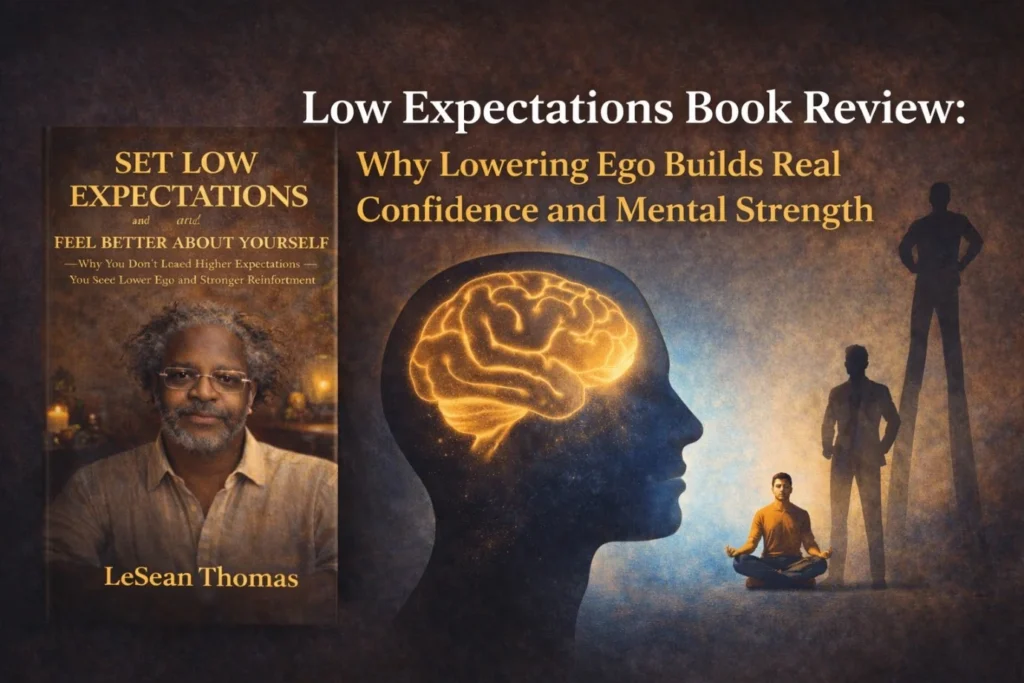
Low Expectations Book Review: Why Lowering Ego Builds Real Confidence and Mental Strength

Introduction In today’s fast-paced world of ambition, competition, and constant comparison, many people are searching for real solutions to build confidence, reduce anxiety, and improve mental strength. Low Expectations: Set Low Expectations and Feel Better About Yourself by LeSean Thomas offers a powerful and unconventional approach to personal growth. Unlike traditional self improvement books that promote high expectations and constant motivation, this book focuses on lowering ego, building internal structure, and developing real confidence that lasts. If you are looking for the best self improvement book, a confidence building book, or a mindset development book, this title stands out as a strong contender. What Makes Low Expectations Different from Other Self-Improvement Books Most self help books focus on motivation, goal setting, and positive thinking. While these methods can be helpful, they often create pressure and unrealistic expectations. Low Expectations takes a different path by addressing the root cause of anxiety and instability. It explains how high expectations linked with ego can lead to stress, overthinking, and emotional imbalance. This makes it one of the most practical personal growth books for readers who are searching for real change instead of temporary motivation. Whether you are exploring books on mental strength, emotional intelligence, or discipline and productivity, this book provides a grounded and realistic perspective. How Lowering Ego Improves Confidence and Reduces Anxiety One of the core ideas in this confidence-building book is that the ego is often the hidden reason behind anxiety and lack of confidence. When people attach their identity to outcomes, validation, and recognition, they become vulnerable to pressure and self-doubt. This leads to constant comparison, fear of failure, and emotional instability. By lowering ego and separating identity from external results, individuals can experience true confidence and mental clarity. This concept is highly relevant for those searching for how to reduce anxiety, how to stop overthinking, and how to build self-confidence naturally. It positions the book as a powerful anxiety management guide and mindset improvement resource. Building Mental Strength Through Structure and Reinforcement Unlike many personal development books that rely on motivation, Low Expectations emphasizes structure and reinforcement. The book highlights that real mental strength comes from consistent habits such as proper sleep, preparation, and controlled thinking. These foundational practices create stability and reduce uncertainty. For readers interested in productivity improvement, discipline building, and stress management techniques, this book provides actionable insights that can be applied in daily life. It aligns perfectly with search intent around mental strength strategies, daily habits for success, and long-term self development. Why This Book Is Ideal for Professionals and Entrepreneurs In a highly competitive environment, professionals and entrepreneurs often face intense pressure to perform and succeed. This pressure can lead to burnout, anxiety, and decision fatigue. Low Expectations addresses these challenges by teaching readers how to manage expectations, reduce ego-driven stress, and build internal resilience. It is one of the best books for confidence and anxiety for individuals working in demanding environments. Whether you are a business owner, freelancer, or corporate professional, this book offers practical strategies for maintaining focus, clarity, and emotional control. SEO Keywords Naturally Targeted in This Blog This blog is optimized for high-ranking keywords including low expectations book, self improvement books, confidence building book, how to reduce anxiety, mindset development book, emotional intelligence book, personal growth books, discipline and productivity, mental strength strategies, and best books for confidence and anxiety. These keywords help improve search engine visibility and attract readers who are actively looking for solutions in personal development, mental health, and confidence building. Final Thoughts Low Expectations by LeSean Thomas is more than just another self help book. It is a practical guide to reducing anxiety, improving confidence, and building long-term mental strength. By focusing on lowering ego and strengthening internal structure, the book offers a realistic and effective approach to personal growth. If you are tired of temporary motivation and looking for a sustainable way to improve your mindset, this book is a valuable addition to your reading list. Where to Buy Low Expectations You can purchase Low Expectations from the official website LeSeanThomasOfficial.com, as well as on Amazon and Barnes & Noble. These platforms make it easy for readers worldwide to access one of the best self improvement books for confidence, anxiety, and mental strength.

Best Children’s Books
Blog

Best Children’s Books for Parenting: A Complete Guide to Raising Kind, Confident, and Emotionally Strong Kids

Introduction In today’s fast-paced and digitally driven world, parents are increasingly searching for effective ways to support their child’s emotional, social, and intellectual development. One of the most powerful tools available is children’s books. High-quality children’s books are not only a source of entertainment but also a foundation for early childhood development. From building emotional intelligence to teaching essential life values, the right kids books can play a transformative role in modern parenting. The Importance of Children’s Books in Early Childhood Development Children’s books are essential for shaping a child’s early learning experience. They introduce young minds to language, emotions, and real-life situations in a simple and engaging way. Reading children’s books regularly helps improve vocabulary, comprehension, and listening skills. More importantly, it allows children to explore different perspectives, which is a key component of emotional and social development. Parenting experts widely recommend incorporating daily reading habits to support a child’s overall growth. How Children’s Books Build Emotional Intelligence Emotional intelligence is a critical skill that begins developing in early childhood. Children’s books provide a safe space for kids to understand and process emotions such as happiness, sadness, fear, and empathy. Through relatable characters and storytelling, children learn how to handle their feelings and respond to others with care and understanding. This makes children’s literature a powerful parenting tool for raising emotionally aware and balanced individuals. Teaching Moral Values Through Kids Books One of the most significant benefits of children’s books is their ability to teach moral values. Stories that focus on kindness, honesty, respect, sharing, and compassion help children develop a strong ethical foundation. These values are essential for building positive behavior and social responsibility. Parents who consistently introduce value-based children’s books often see improvements in their child’s attitude, behavior, and interactions with others. The Role of Reading in Strengthening Parent-Child Relationships Reading together is more than just an educational activity; it is a meaningful bonding experience. It provides parents and children with quality time to connect, communicate, and build trust. This interaction strengthens the parent-child relationship and creates a positive environment for learning. In modern parenting, where time is often limited, shared reading becomes an effective way to nurture both emotional connection and intellectual growth. Key Features of the Best Children’s Books Not all children’s books deliver the same impact. The best kids books are those that combine simplicity with meaningful content. They use easy-to-understand language, engaging storytelling, and relatable characters. Additionally, interactive elements such as activities or questions can enhance a child’s learning experience. Books that integrate fun with education are more likely to keep children engaged while delivering valuable life lessons. Modern Parenting and the Need for Value-Based Children’s Books Today’s parenting challenges require more than traditional teaching methods. Parents are now focusing on raising children who are not only academically strong but also emotionally intelligent and socially responsible. Value-based children’s books play a crucial role in this process by offering guidance in a subtle and engaging way. They help parents communicate important lessons without being overly strict, making learning more natural and effective. Introducing The Big Book of Caring For parents looking for a comprehensive children’s book that combines storytelling, emotional learning, and creativity, The Big Book of Caring offers a unique solution. This book is designed to support modern parenting by teaching children essential life values through engaging characters and meaningful lessons. It stands out as a powerful resource for both learning and entertainment. About The Big Book of Caring The Big Book of Caring introduces children to a world of imaginative dinosaur characters, each representing a specific value such as kindness, empathy, respect, honesty, confidence, patience, and love. Through rhyming stories and creative storytelling, the book makes complex ideas easy for children to understand. It also includes interactive elements like coloring activities, making it an engaging and educational experience for young readers. Why The Big Book of Caring is Ideal for Parents This book is carefully crafted to support both children and parents in the learning journey. It helps children develop emotional intelligence, build strong moral values, and improve social skills. For parents, it serves as a practical tool to teach important life lessons in a simple and relatable way. Its structure makes it suitable for daily reading, bedtime routines, and educational activities. How This Book Supports Child Development and Parenting Goals The Big Book of Caring aligns perfectly with modern parenting goals by focusing on holistic child development. It encourages positive behavior, emotional awareness, and confidence in children. By using storytelling as a teaching method, it allows parents to guide their children without pressure, creating a supportive and nurturing environment. Best Age Group and Usage This children’s book is ideal for kids aged 4 to 10 years. It is suitable for use at home, in schools, and in early learning environments such as daycare centers. Parents, teachers, and caregivers can all benefit from incorporating this book into their daily routines to enhance a child’s learning experience. Conclusion Children’s books remain one of the most effective tools in parenting for raising kind, confident, and emotionally strong children. They provide a foundation for lifelong learning, emotional growth, and positive behavior. Choosing the right children’s books can significantly impact a child’s development and future success. The Big Book of Caring stands out as a valuable resource for parents who want to combine learning, creativity, and character building in a single, engaging experience.

Low Expectations Book
Blog

Low Expectations Book Review: Why Lowering Ego Builds Real Confidence and Mental Strength

Introduction In a world driven by ambition, self-improvement, and constant pressure to achieve more, the book Low Expectations: Set Low Expectations and Feel Good About Yourself by LeSean Thomas challenges a deeply rooted belief. Instead of telling you to aim higher, this book introduces a powerful and unconventional idea. You do not need higher expectations to succeed. You need lower ego and stronger reinforcement. This perspective makes the book stand out in the category of self-help books, mental health improvement, and personal development strategies. If you are searching for a book about confidence, anxiety control, emotional stability, or mindset growth, this book positions itself as a must-read. What is Low Expectations About This book is not about lowering your standards or becoming less ambitious. It focuses on separating ego from expectations. Most people struggle not because they aim too low, but because their expectations are tied to validation, recognition, and comparison. The book explains that: Instead of chasing external approval, the book teaches you to build internal stability. This makes it highly relevant for readers interested in: Key Concepts That Make This Book Powerful Many self-help books tell you to believe in yourself. This book takes a different approach. Confidence is not something you claim. It is something you build through preparation and repetition. When you are well-prepared, your mind becomes calm. That calmness is real confidence. This concept is important for professionals, entrepreneurs, and students who struggle with performance anxiety. One of the strongest ideas in the book is that ego creates unnecessary pressure. When your identity depends on how others see you: Lowering ego allows you to stay steady, even under pressure. This makes the book valuable for leadership development, workplace confidence, and personal growth. The book emphasizes three core anchors: These are not motivational ideas. They are structural habits. When practiced consistently, they create mental clarity, emotional control, and long-term stability. This is why the book fits perfectly into topics like: One of the most important insights from the book is that anxiety often comes from being underprepared, not weak. When you build only to the minimum standard, your mind stays alert and tense. When you build beyond requirements, you develop surplus. Surplus creates calm. This idea connects strongly with search intent around: Why This Book is Different from Other Self Help Books Most personal development books focus on motivation, positive thinking, and goal setting. This book focuses on structure. It does not try to inspire you emotionally. It trains you to become steady. That is why it appeals to: It is practical, realistic, and deeply psychological. Who Should Read This Book This book is ideal for: If you are searching for a book that provides long-term mental strength instead of short-term motivation, this is a strong choice. SEO Keywords Integrated in This Blog This blog naturally targets high-ranking keywords such as: These keywords help improve search visibility and drive organic traffic. Final Thoughts Low Expectations is not just another self-help book. It is a structural guide to building confidence, reducing anxiety, and developing a stable mindset. It teaches you that: If your goal is to improve mental clarity, emotional control, and long-term confidence, this book delivers a powerful and practical approach. Where to Buy Low Expectations The book Low Expectations: Set Low Expectations and Feel Good About Yourself by LeSean Thomas is now available across multiple trusted platforms, making it easy for readers worldwide to access. You can purchase the book from: This wide availability ensures that readers searching for self improvement books, confidence building books, and mental strength guides can easily find and purchase the book from their preferred platform.

Scroll to Top